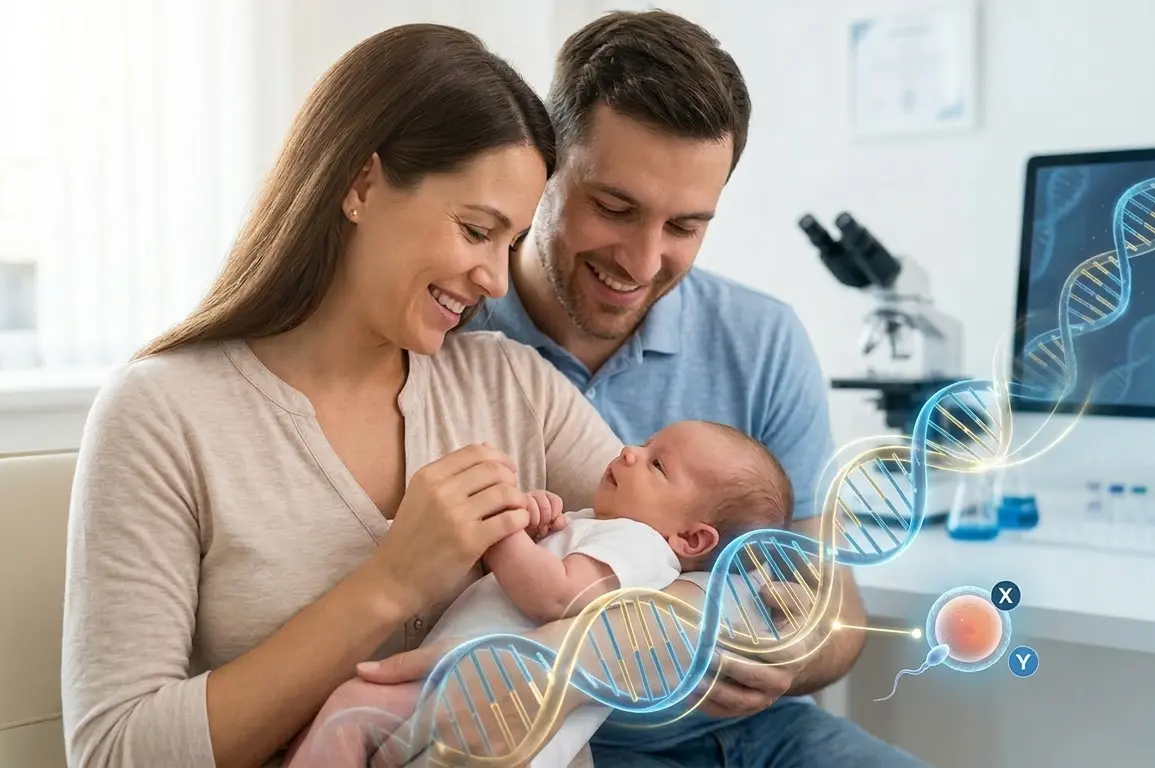

This is the process that ensures the genetic codes of the donor and the biological father work in total harmony, minimizing the risks of hereditary diseases.
What is “Genetic compatibility”?
It’s important to understand: there is no such thing as a “perfect” human. Every one of us is a carrier of 5 to 10 hidden genetic mutations. This isn’t a disease -it’s a feature of our DNA. Typically, these mutations never manifest because we have a “backup” healthy copy of the gene from the other parent.
However, if both the egg donor and the biological father carry a mutation in the same gene, there is a risk of having a child with a recessive disorder. Genetic Matching is the “insurance policy” that ensures these hidden mutations never meet.
How does the process work?
- Donor’s genetic passport: every donor in our bank has already undergone Expanded carrier screening.
- Partner screening: the future father provides a sample (blood or saliva) to create his genetic profile.
- Lab comparison: our geneticists compare thousands of genes from both profiles.
- Expert report: you receive a compatibility report. If a match is found in a risky gene, we simply help you select another donor who is a perfect match for the father.