
The success of assisted reproductive technologies (ART) often depends on the quality of the preserved material, which raises an important question: how long can cryopreserved material be stored while maintaining its viability?
The Science Behind Cryopreservation
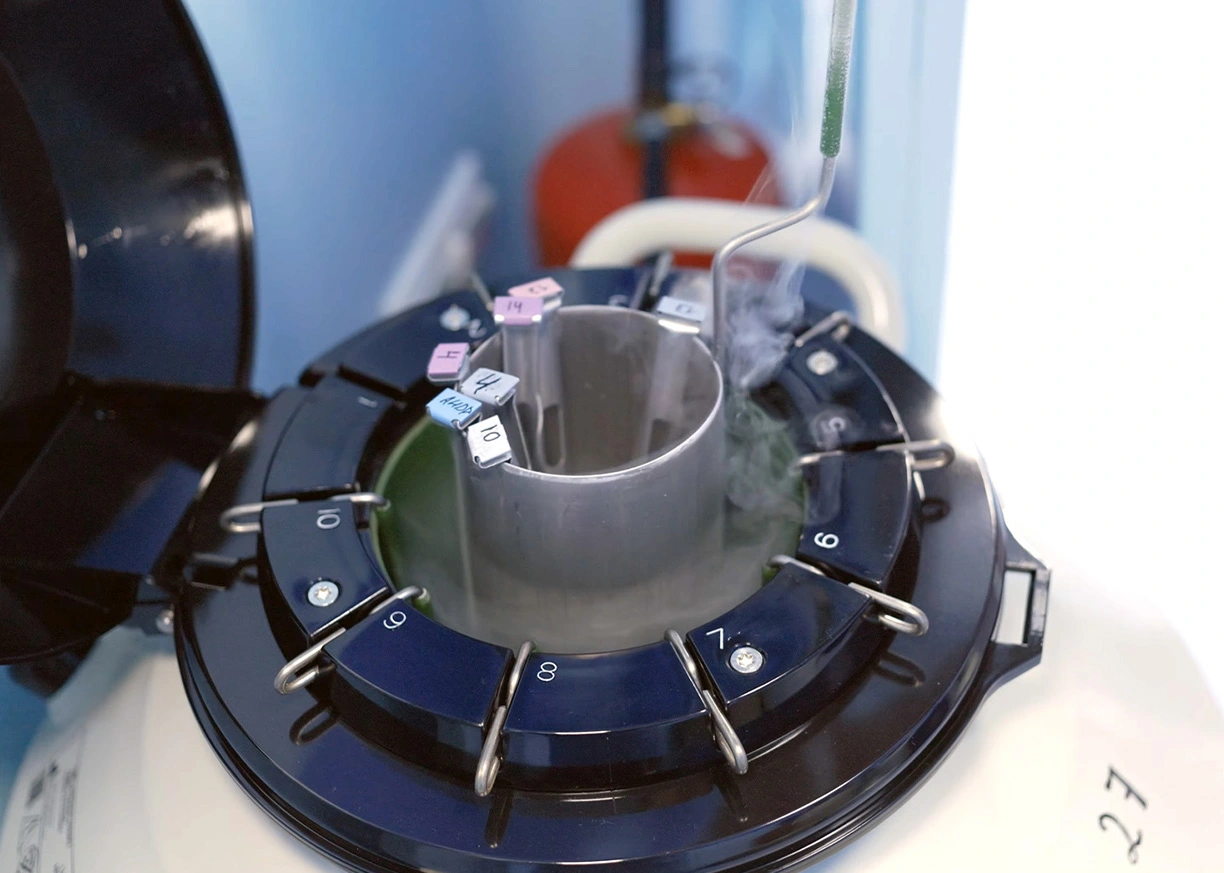
Cryopreservation involves freezing biological material at ultra-low temperatures, typically around -196°C (-320.8°F) using liquid nitrogen. At this temperature, all metabolic activity ceases, preventing cellular degradation and ensuring long-term preservation.
Storage Duration for Different Cryopreserved Materials
The longevity of cryopreserved materials depends on various factors, including the type of material and the freezing method used.
- Sperm: Sperm cells can be stored for decades without significant loss of quality. Cases have been reported where sperm has remained viable for over 20 years, with successful pregnancies achieved from samples stored for more than 25 years.
- Oocytes (Eggs): Egg freezing has advanced significantly with vitrification, a rapid freezing technique that prevents ice crystal formation. Studies suggest that oocytes can be stored for at least 10–15 years while retaining a high survival rate post-thaw.
- Embryos: Embryos have been successfully used after over 20 years of storage. In 2022, a baby was born from an embryo that had been frozen for 30 years, demonstrating the remarkable longevity of properly cryopreserved embryos.
Factors Affecting Storage Time
While cryopreservation itself prevents biological degradation, several factors influence the effectiveness of long-term storage:
- Freezing Method: Vitrification is preferred for oocytes and embryos due to its ability to prevent ice crystal formation, which can damage cells.
- Storage Conditions: Consistent monitoring of liquid nitrogen levels and maintaining stable ultra-low temperatures are critical for preserving viability.
- Initial Quality of Material: Higher-quality sperm, eggs, or embryos have a better chance of surviving long-term freezing and thawing.
Legal and Ethical Considerations
Many countries have regulations regarding the maximum storage duration for cryopreserved materials:
- In some regions, sperm, eggs, and embryos can be stored indefinitely, provided periodic consent is obtained.
- Other countries impose a legal limit (e.g., 10 or 20 years), after which renewal or disposal of the material is required.
Is There a Storage Time Limit?
Scientific evidence suggests that as long as cryopreserved materials remain properly stored in liquid nitrogen, they do not deteriorate over time. This means that, in theory, they can be stored indefinitely and still be viable upon thawing.
Conclusion
Cryopreservation offers a reliable method for preserving fertility and reproductive options for years or even decades. While legal and ethical considerations may impose limitations, scientific studies confirm that sperm, eggs, and embryos can remain viable for extended periods. This provides individuals and couples with greater flexibility in planning their reproductive future.